

5-Amino-1MQ Benefits: Main Advantages and Research
5-amino-1MQ is a small-molecule NNMT inhibitor studied for fat metabolism, NAD+ support, and metabolic health — with promising but almost entirely preclinical (mouse) evidence. This guide explains what 5-amino-1MQ is, how NNMT inhibition is thought to work, what the research actually shows, the honest limitations, and how to source research-grade material responsibly.
Editorial & research disclaimer: This article is for educational purposes only and is not medical advice. 5-amino-1MQ is a research compound studied chiefly in animal models; it is not approved for human use. Always consult a licensed healthcare professional and verify local regulations before handling any research compound.

Quick Answer
What are the main 5-amino-1MQ benefits being researched? In preclinical (mostly mouse) studies, 5-amino-1MQ — a small-molecule inhibitor of the enzyme NNMT — is studied for reducing fat mass, improving body composition and muscle mass, increasing cellular energy expenditure and energy levels, raising NAD+ and SAM levels, and improving insulin sensitivity.
Crucially, this evidence is largely from animal models, with little human data. 5-amino-1MQ is a research compound, not an approved supplement or drug, so claims should be kept proportional to the (early) evidence.
5-amino-1MQ is an NNMT inhibitor — a small molecule (not a peptide) studied for metabolism and fat loss.
Mechanism: blocking NNMT in fat tissue is proposed to raise cellular NAD+ and SAM, boosting mitochondrial function, efficiency, energy production, and energy expenditure.
Research signals: reduced fat mass, better insulin sensitivity, and metabolic improvements — mostly in mice.
Also explored for muscle strength/recovery and aging endpoints, with limited evidence.
Honest limit: little human data; treat as a research compound and verify quality before sourcing.
What Is 5-Amino-1MQ?
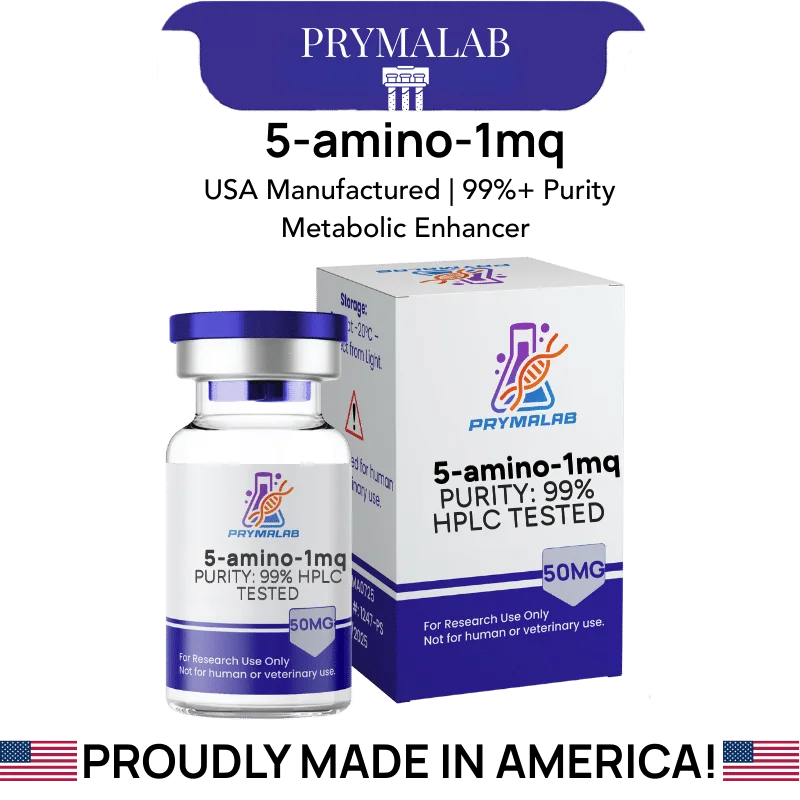
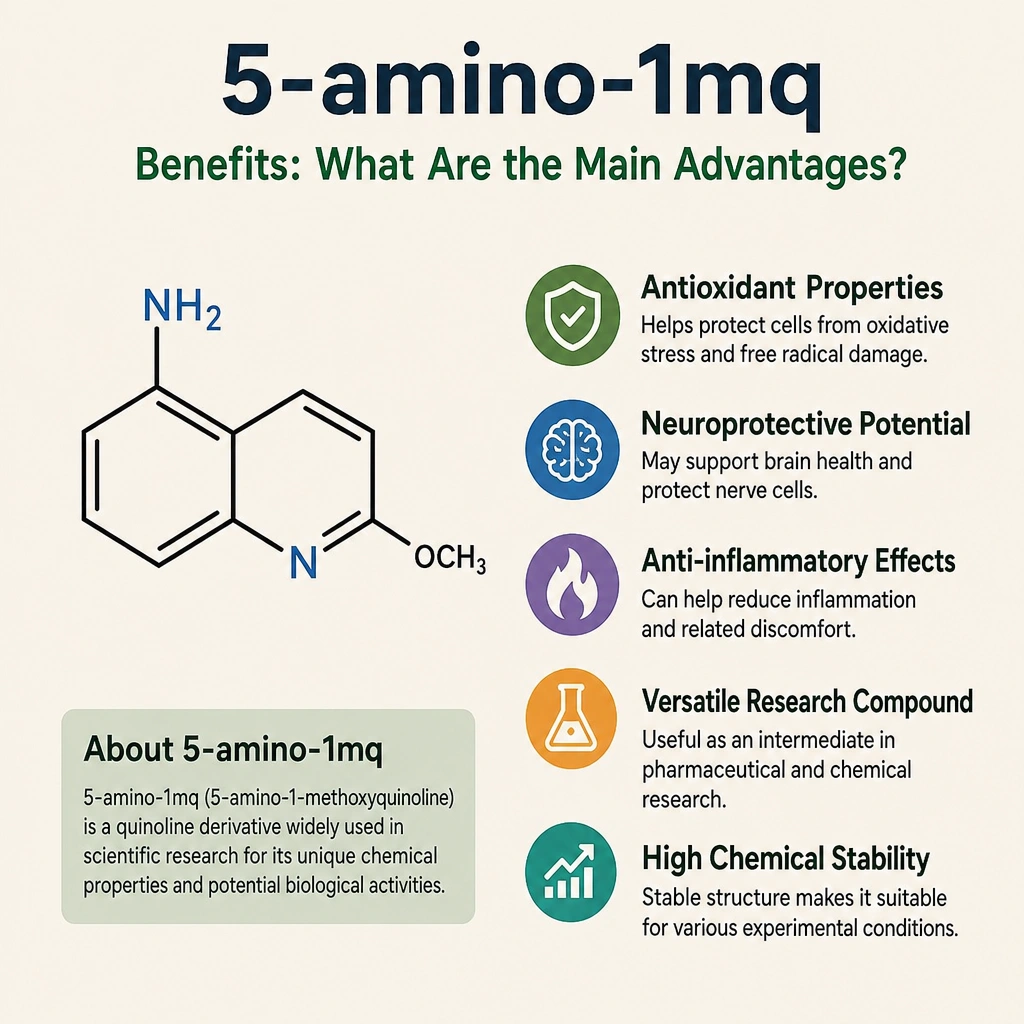
5-amino-1MQ (5-amino-1-methylquinolinium) is a small-molecule research compound — not a peptide, though it is often grouped with functional medicine research, metabolic peptides, and peptide therapy because of how it is studied and sold. Its defining feature is that it inhibits an enzyme called NNMT (nicotinamide N-methyltransferase), which is highly active in fat tissue and has been linked to metabolic dysfunction.
- Small-molecule NNMT inhibitor, typically studied in oral form.
- Investigated mainly for fat burning metabolism, energy metabolism, weight management, endurance, metabolic support, and metabolic health.
- Linked to cellular NAD+ and SAM pathways, which are critical for DNA repair and healthy aging.
- Studied chiefly in animal models; not approved for human use.
How Does 5-Amino-1MQ Work? Mechanism of Action
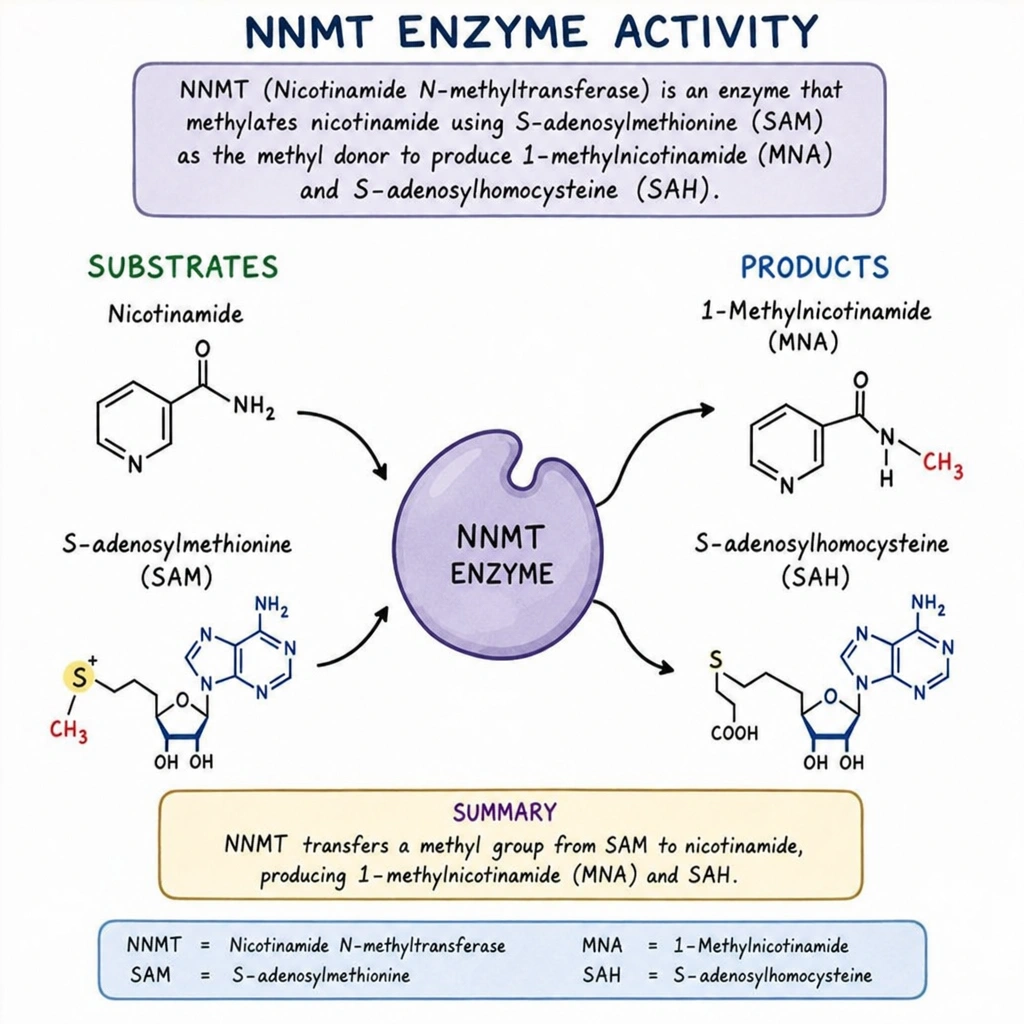
NNMT is an enzyme that consumes nicotinamide (a precursor to nicotinamide adenine dinucleotide, or NAD+) and SAM (a key methyl donor). When NNMT is overactive in fat tissue, it can drain these resources and is associated with increased fat storage, weight gain, and a slow metabolism. By inhibiting NNMT, 5-amino-1MQ is proposed to preserve cellular NAD+ and SAM, which research links to higher energy production and expenditure in fat cells and improved metabolic signaling.
- Inhibition of NNMT: the central, defining mechanism.
- Enhanced energy expenditure: proposed downstream effect in adipose tissue.
- Improved glucose handling / insulin sensitivity: observed in models.
- NAD+ support: by sparing nicotinamide to maintain NAD+ levels—a mechanism often explored in NAD+ therapy research—which may influence SIRT1 activity (often called a longevity gene) and cellular repair, with proposed anti-aging relevance.
What Does the Research Actually Say?
The most-cited findings come from animal studies and cell work. They are genuinely interesting but should be read as early-stage signals, not proven human outcomes.
| Endpoint | Reported signal | Evidence level |
|---|---|---|
| Fat mass | Reduction in fat mass | Preclinical (mouse) |
| Insulin sensitivity | Improved | Preclinical |
| Glucose metabolism | Better glucose control | Preclinical |
| Muscle | Strength/recovery interest | Limited / emerging |
| Aging / NAD+ | Possible healthspan relevance via sirtuins | Hypothesis-stage |
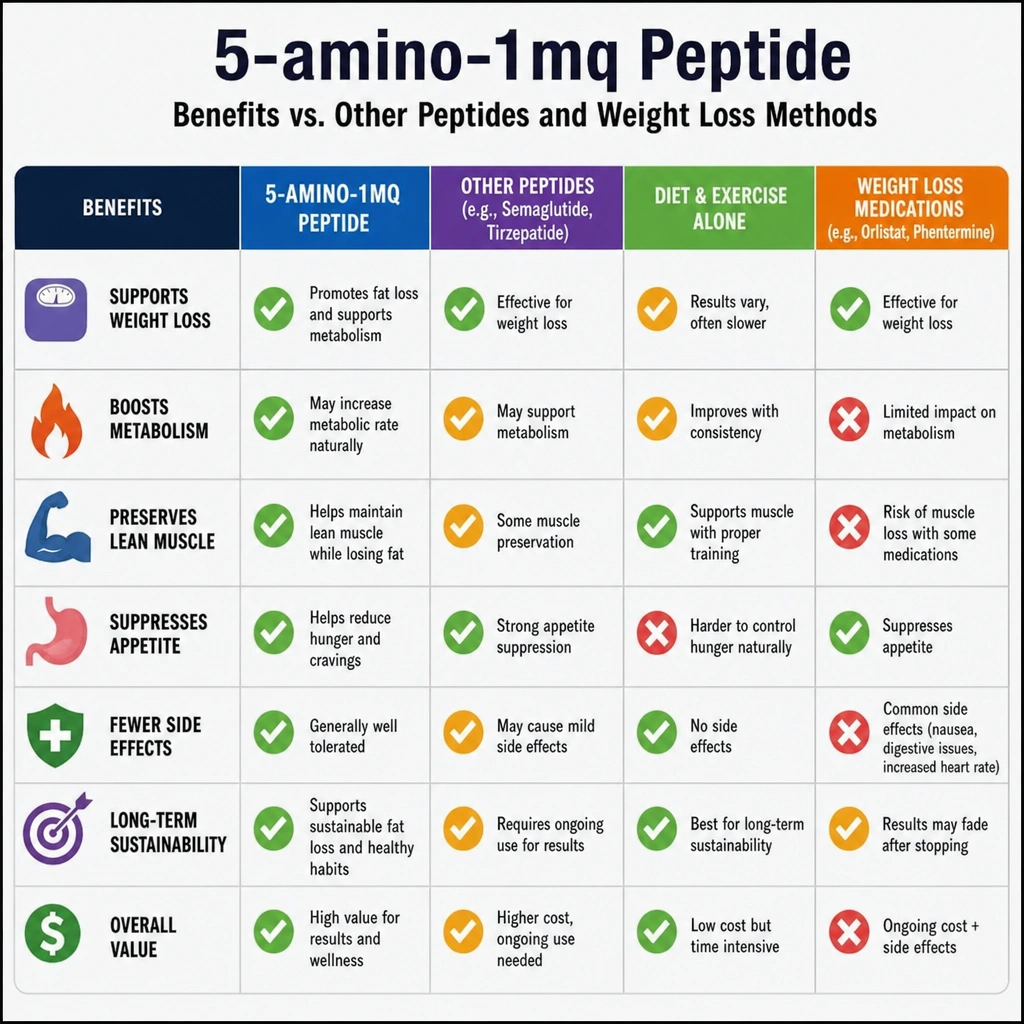
The honest limitation: human clinical data are sparse. Strong human weight-loss or anti-aging claims outrun the current evidence, which is concentrated in mice and cell systems.
5-Amino-1MQ Dosage and Administration (Research Context)
Because 5-amino-1MQ is not approved for human use, there is no established human dose; protocols described online are research parameters, not medical guidance. It is typically studied in oral form. If evaluating it, rely on the supplier's documentation and professional input rather than anecdote.
How to Identify High-Quality 5-Amino-1MQ
As a research chemical, 5-amino-1MQ quality varies by vendor, and verification is your protection. Look for documentation, not marketing:
| Factor | High-Quality (Verified) | Low-Quality / Offshore |
|---|---|---|
| Purity | 99%+ by HPLC, identity confirmed | Unverified, self-reported, or below 95% |
| COA | Batch-specific, recent, third-party lab | Missing, generic, undated, or photocopied |
| Manufacturing | Cleanroom, validated lyophilization | Sterility & environment unclear |
| Shipping | Cold-chain where required | Ambient; degradation risk |
| Labeling | Clear “research use only” | Mixed consumer/medical claims |
Where to Buy 5-Amino-1MQ Safely
For a metabolic research chemical like 5-amino-1MQ, dedicated research suppliers that meet the documentation standard above are the relevant channel — and only for legitimate research use.
| Channel | Selection | Oversight | Best for |
|---|---|---|---|
| Research-peptide suppliers | Broad; specialized compounds | COA-driven; varies by vendor | Informed researchers who verify COAs |
| Licensed pharmacies / clinics | Limited / approved drugs only | High; professional oversight | Approved medications & guidance |
| General online marketplaces | Wide but unvetted | Low; highest variance | Generally not recommended |
Browse PrymaLab's fat-loss & metabolic research category as a reference point for the transparency standards a trustworthy supplier should meet.
Researching metabolic compounds? Verify quality first.
PrymaLab focuses on transparent, batch-specific COAs and careful handling so your research material is exactly what the label says.
Explore Metabolic Research CompoundsFrequently Asked Questions
What are the main benefits of 5-amino-1MQ being researched?
In mostly mouse studies, 5-amino-1MQ — an NNMT inhibitor — is researched for reducing fat mass, increasing cellular energy expenditure, raising NAD+ and SAM, and improving insulin sensitivity, with additional interest in muscle and aging endpoints. The evidence is largely preclinical, so these are research signals, not proven human benefits.
What is 5-amino-1MQ?
5-amino-1MQ (5-amino-1-methylquinolinium) is a small-molecule research compound — not a peptide — that inhibits the enzyme NNMT (nicotinamide N-methyltransferase). NNMT is highly active in fat tissue and linked to metabolic dysfunction, cellular metabolism issues, and oxidative stress at the cellular level. 5-amino-1MQ is studied chiefly in animal models and is not approved for human use.
How does 5-amino-1MQ work?
NNMT consumes nicotinamide (a NAD+ precursor) and SAM (a methyl donor). When overactive in fat tissue it is associated with fat accumulation. By inhibiting NNMT, 5-amino-1MQ is proposed to preserve cellular NAD+ and SAM, which research links to higher energy expenditure, a more favorable energy balance, a shift in energy balance, increased ATP production in fat cells, and improved metabolic signaling — observed mainly in animal models.
Is 5-amino-1MQ a peptide?
No. Despite often being grouped with metabolic peptides, 5-amino-1MQ is a small-molecule research chemical, not a peptide. It is typically studied in oral form and is defined by its inhibition of the NNMT enzyme rather than by peptide signaling.
Does 5-amino-1MQ cause weight loss in humans?
Human data are sparse, especially when compared to established compounds like semaglutide. The weight and fat-loss findings come mainly from mouse studies, where NNMT inhibition reduced fat mass and improved metabolic markers. Strong human weight-loss claims outrun the current evidence, so 5-amino-1MQ should be treated as an early-stage research compound, not a proven human therapy.
Is 5-amino-1MQ safe?
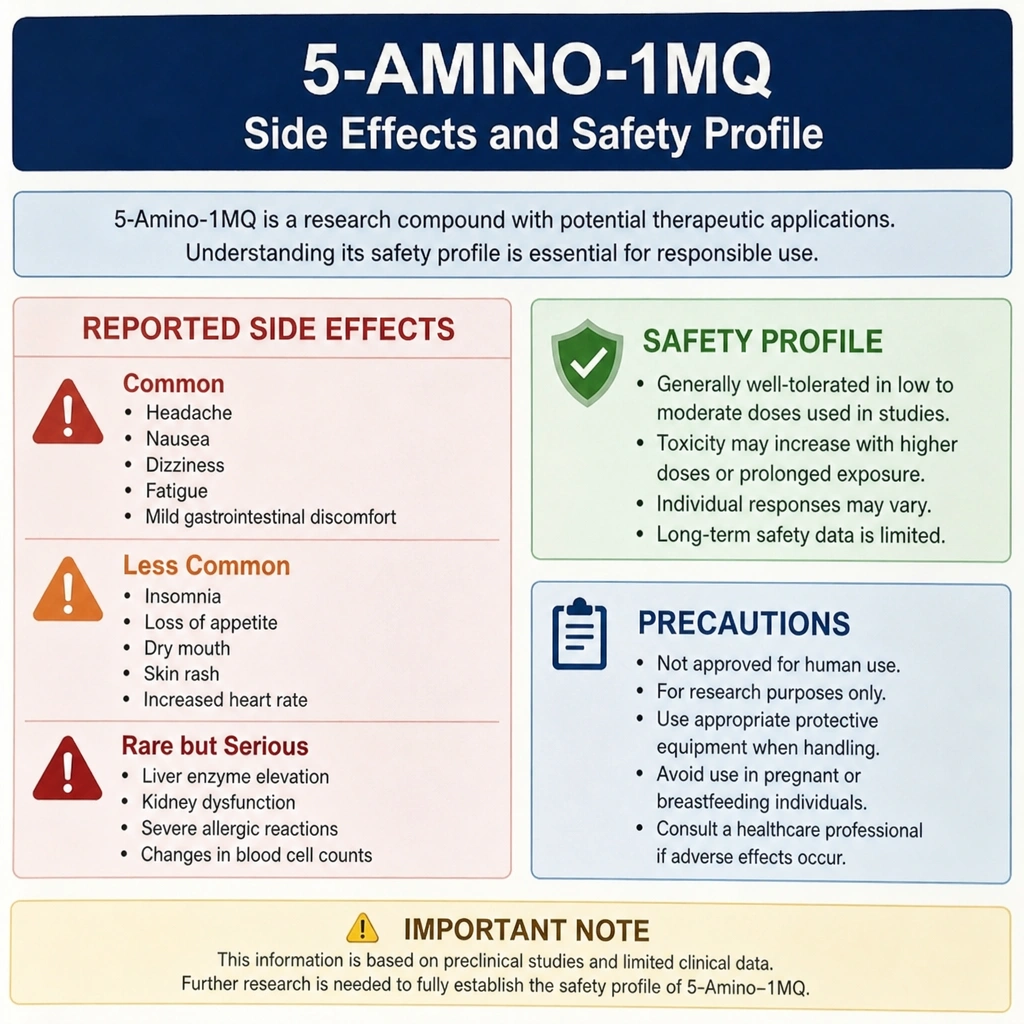
Because it has been studied chiefly in animals with little human data, the human safety profile of 5-amino-1MQ is not established. It is a research compound, not an approved supplement or drug. Anyone considering it should consult a licensed healthcare professional and verify legality before any use.
How do I identify high-quality 5-amino-1MQ?
Look for documentation, not marketing: a batch-specific COA with high HPLC purity and identity confirmation from an independent third-party lab, clear sourcing, and proper labeling for research use only. Missing or generic COAs, extreme discounts, and anonymous sellers are red flags.
Is 5-amino-1MQ legal to buy?
5-amino-1MQ is sold as a research compound and is not approved for human use; legality varies by country and state, and buying it for personal use sits in a gray zone. Confirm your local regulations, and buy only from suppliers that label the product for research use only and require age verification.
References & Further Reading
- Kraus, D., et al. (2014). Nicotinamide N-methyltransferase knockdown protects against diet-induced obesity. Nature, 508, 258–262.
- Neelakantan, H., et al. (2018). Small molecule NNMT inhibitor reduces fat mass in diet-induced obese mice. Biochemical Pharmacology, 147, 141–152.
- Pissios, P. (2017). Nicotinamide N-methyltransferase: more than a vitamin B3 clearance enzyme. Trends in Endocrinology & Metabolism, 28(5), 340–353.
- U.S. Food and Drug Administration. Compounding and the FDA: Questions and Answers. FDA.gov. Accessed 2026.
PrymaLab resources: Fat-loss & metabolic research compounds · Research Hub · Peptide calculator · FAQ · About PrymaLab.
Final disclaimer: This article is for educational purposes only. 5-amino-1MQ and the other compounds discussed are sold for research purposes only and are not approved by the FDA or comparable agencies for human therapeutic use. Statements about their effects have not been evaluated by the FDA.
Always consult a licensed healthcare professional before starting any new health protocol, and verify the legal status of any compound in your jurisdiction. PrymaLab does not endorse any specific third-party peptide vendor mentioned in this article and assumes no responsibility for third-party products.